Testing and debugging are crucial aspects of the software development process. Proper testing ensures that your Python code functions as intended, while debugging helps identify and fix issues in the code. In this blog, we will delve into strategies and best practices for testing and debugging Python applications, covering various tools and techniques to ensure... Continue Reading →
Python Functions: A Guide for Beginners with Examples
Python functions are essential building blocks of any Python program. They allow you to encapsulate blocks of code, making it easier to manage, understand, and reuse. In this blog, we will see the basics of Python functions, from their syntax and structure to using parameters, returning values, and understanding function scope. By the end, you'll... Continue Reading →
Tkinter Layout Management – Python
In Tkinter, layout management refers to the process of organizing and positioning widgets (such as buttons, labels, and other graphical elements) within a window or frame. Tkinter provides three built-in layout managers: pack, grid, and place. Each manager has its advantages and is suitable for different situations. Let's go through each layout manager: Pack Manager... Continue Reading →
Essential Tkinter Widgets to Build User Interfaces in Python
User interfaces (UIs) are essential in modern software development, enabling users to interact with applications seamlessly. Tkinter, a powerful Python library, provides an intuitive and flexible framework for creating GUI applications. In this detailed blog, we will explore the process of building user interfaces using Tkinter, covering important concepts, key widgets, layout management, event handling,... Continue Reading →
Conditional Statements and Loops in Python
Conditional statements and loops are essential building blocks in Python programming. They allow you to control the flow of your code and perform repetitive tasks efficiently. In this blog post, we will explore the different types of conditional statements and loops available in Python, along with practical examples to illustrate their usage. Conditional Statements: If... Continue Reading →
Statistical Analysis with NumPy:
Statistical analysis is an essential component of data analysis and plays a crucial role in making informed decisions. NumPy, a powerful library in Python, provides numerous functions and methods to perform statistical operations efficiently. In this blog post, we will explore the various statistical analysis techniques available in NumPy and provide detailed examples to illustrate... Continue Reading →
Exploring Data Visualization with Matplotlib in Python
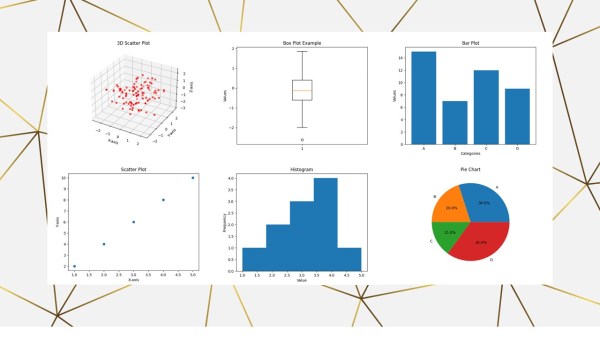
Data visualization plays a crucial role in data analysis and exploration. It helps us gain insights from complex datasets and communicate information effectively. In Python, Matplotlib is a powerful library widely used for creating visually appealing and informative plots. In this blog post, we will delve into the world of data visualization with Matplotlib and... Continue Reading →
Python Matplotlib – Customizing plots
Customizing plots in Matplotlib allows you to tailor the appearance and style of your visualizations to better convey your data. Here are some common customization options and techniques you can use with Matplotlib: Changing Colors:Adjusting Line Styles:Adding Markers:Controlling Axes and Grids:Styling Titles and Text:Modifying Legends:Adding Annotations and Arrows:Creating Subplots:Applying Stylesheets:Example Changing Colors: Set the color... Continue Reading →
Getting started with Tkinter
Python is a widely used programming language that offers many frameworks for building desktop and web applications. One such framework is Tkinter, which is a Python binding to the Tk GUI toolkit. Tkinter is used for developing GUI (Graphical User Interface) applications, and it comes pre-installed with Python. In this blog, we will discuss the... Continue Reading →
Linear Interpolation using Python GUI
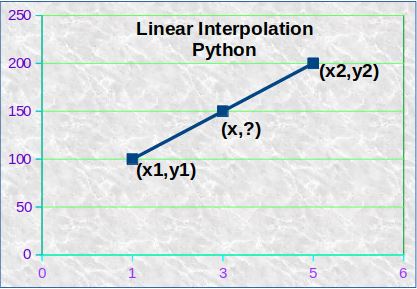
Linear interpolation is the simplest form of interpolation. It involves estimating the value of a function at a point using a straight line between two neighboring data points. For example, if we have two data points (x1, y1) and (x2, y2), we can estimate the value of the function at a point x within the... Continue Reading →

