In Tkinter, layout management refers to the process of organizing and positioning widgets (such as buttons, labels, and other graphical elements) within a window or frame. Tkinter provides three built-in layout managers: pack, grid, and place. Each manager has its advantages and is suitable for different situations. Let's go through each layout manager: Pack Manager... Continue Reading →
Essential Tkinter Widgets to Build User Interfaces in Python
User interfaces (UIs) are essential in modern software development, enabling users to interact with applications seamlessly. Tkinter, a powerful Python library, provides an intuitive and flexible framework for creating GUI applications. In this detailed blog, we will explore the process of building user interfaces using Tkinter, covering important concepts, key widgets, layout management, event handling,... Continue Reading →
Getting started with Tkinter
Python is a widely used programming language that offers many frameworks for building desktop and web applications. One such framework is Tkinter, which is a Python binding to the Tk GUI toolkit. Tkinter is used for developing GUI (Graphical User Interface) applications, and it comes pre-installed with Python. In this blog, we will discuss the... Continue Reading →
Linear Interpolation using Python GUI
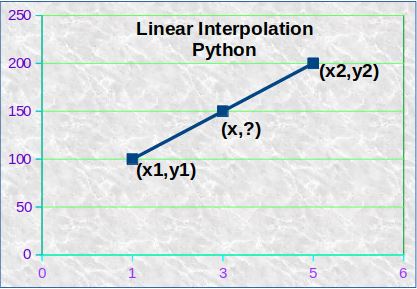
Linear interpolation is the simplest form of interpolation. It involves estimating the value of a function at a point using a straight line between two neighboring data points. For example, if we have two data points (x1, y1) and (x2, y2), we can estimate the value of the function at a point x within the... Continue Reading →
 Information Sharing Blog